Friday, February 21, 2014

Cathedral

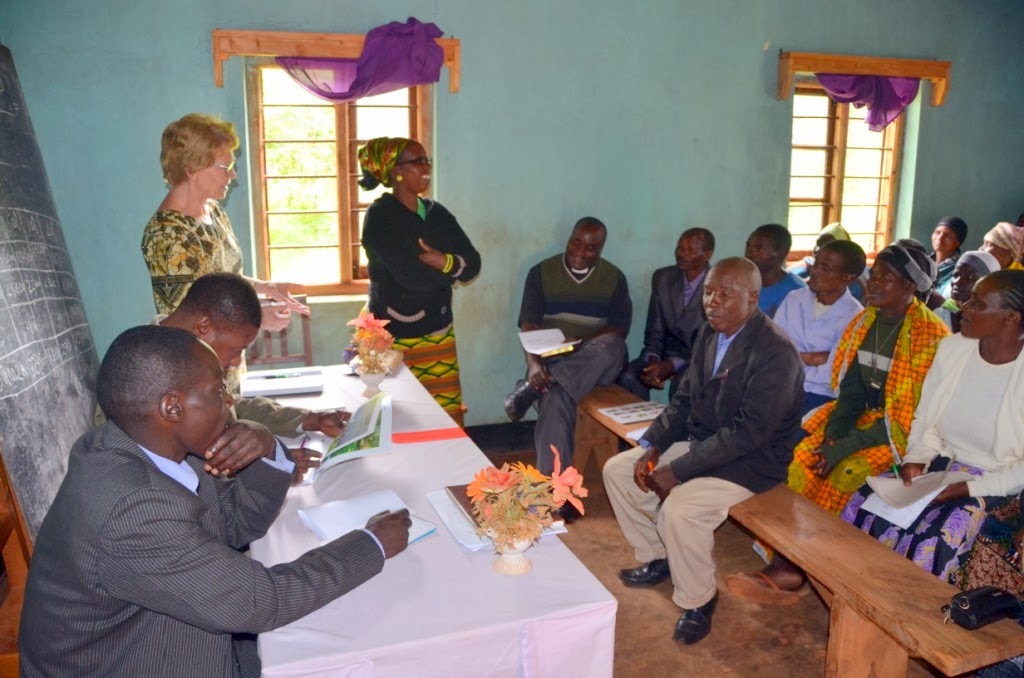
Today we took a short walk through town to Cathedral.  It is a pretty walk with the trees in bloom and all the color and activity in the marketplace.  We did not meet with a SACCOS today but rather with the parish Pastors who have asked us in years past to help them revive a SACCOS that is having problems.

The Cathedral SACCOS was started by a local businessman.  Most of the members came from the Cathedral church which is why they were involved.  The businessman made some poor decisions and closed the SACCOS, causing all of the savers to lose their money.  We suspect that many of his friends and possibly the local co-op officer benefited from the lost funding – but we can’t find out.  The problem is that the records are not available to anyone until the co-op officer finishes his audit.  It has been three years and he is still not done.  The excuses he has are laughable; however since we had no part in this SACCOS we have no standing to be able to force any action.

Today we are telling the parish leaders that it is time to move on.  We suggested this last year but they asked us to keep trying.  We have talked to the municipal officials, other co-op officers, etc, but without having a part in the SACCOS there just is not anything that an outside organization, like Iringa Hope, can do.  So, forget it and move on.

We talk about their options.  It seems to us that the best option for the people here is to have them join our newly formed SACCOS at the diocese, which is called the Diocese of the Iringa Area or DIRA.  The DIRA SACCOS is registered and starting to operate.  We suggest that since DIRA is a short walk for them they should urge their members to go there.  The pastors were surprised that they would be able to do this.  When we wrote the constitution for DIRA we made sure that the membership clause would include Cathedral.  The leaders were very happy to hear this.  They will start telling people this Sunday to go there.  We think that this is the best solution for everyone.

On our way home from Cathedral we passed the government co-op office so we stopped in to visit with the local officers.  We discussed the difference between an AMCOS (Agricultural Marketing Cooperative Society) and a SACCOS.  The two officers couldn't agree on what the functions of each should be.  It soon became clear that the difference is not clear even to the officers. 

While a SACCOS primarily does savings and loans, it is also allowed to operate businesses.   An AMCOS on the other hand cannot take savings nor do loans – it can only do agricultural business.  So where does the SACCOS ability to do business stop and the AMCOS start?  Right now the laws are being updated in Dodoma so we will have to wait and see.


After we left the coop office we headed for the university and more meetings.  While Tom was in meetings, Sandra started English tutoring sessions with Peter, which is right up her alley. 


Downtown Iringa is quiet this morning.


Cathedral is right downtown.


We met with the church leaders.  Pastor Mbogo led the discussion.
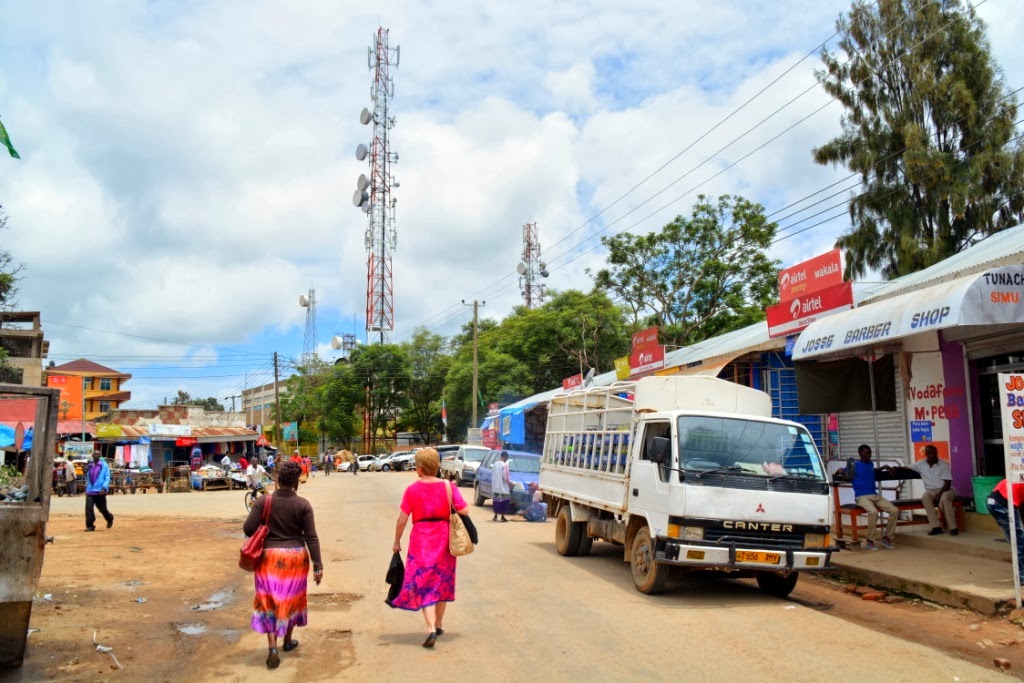

It is a pretty walk back to our apartment.


The trees are in bloom.


We stopped to meet with the SACCOS officers.

Thursday, February 20, 2014

If this Thursday this must Mgama

Today we traveled out to Mgama.  Mgama is a 45 minute drive southwest of Iringa.  The greater part of the trip is on the tarmac, and then we take a dirt road heading south. 

It was raining very hard as we left town.  Between the rain, the windshield that would not clear, and the ground fog that was blowing around it was hard to see.  We stopped along the way to pick up a friend who wanted a ride and arrived in Mgama about 10:00.

When we got to the town there was a large crowd of people milling around. Surely these were not our members?  Once inside we found that only about 11 or so had come for our meeting (our smallest turn-out yet).  It turned out that there were two things going on today that involved much of the town and many of our members.  The first thing was the death of a village member who died suddenly yesterday; most of the members had gone to the funeral today.  This happens often here in Tanzania where the life expectancy is in the 40’s and burials are always within 24-48 hours.  

The second thing was that a 4 year old girl had been raped today and a number of villagers had formed a posse to go and get the man responsible.  When they got to his house they found a large field of marijuana growing there.  The group wanted to beat him but the local police (they are volunteers) managed to tie him up and take him to town.  

Transportation to town was by motorcycle, with the driver in front, the suspect, with his hands tied behind his back, in the middle, and a third man riding behind him, apparently a sort of village authority.  They were holding him in a small room behind our meeting room and when the authorities were ready to take him to town he was lead through our meeting space.  We were told that the victim would be taken to a hospital where she would be checked for HIV-AIDS and that if brought to the hospital within 72 hours of the assault, she could be given some sort of preventative treatment.  This was explained to us by non-medical people, so if you are up to speed on HIV-AIDS treatment, please excuse our ignorance.  We were also told that punishment for rape of a child was 60 years in prison. 

We met with the SACCOS officers in the SACCOS to get the basic information on how their SACCOS is performing.  Mgama is a fairly new SACCOS.  Last year it had 47 members.  This year it had shot up to 93.  We were told that once the farmers in Mgama realized that our SACCOS was really going to work to help them, there were many people eager to join.  The members of the SACCOS decided that instead of limiting the number of new members they would limit the loans!  As a result they decided that every member who applied would be awarded 180,000 TZS ($120) no matter how much they applied for.  As a result they felt that they could make 85 loans and admitted more members (there is still a waiting list of over 40 people).  This meant that most members borrowed less than half of what they wanted – but they all felt that it was better to admit more anyway.

Their repayment rate for these loans was 100% on time and in full.  Their SACCOS made a profit of 3,200,000 TZS ($2,000) last year and is projecting a profit of over 4,500,000 this year. 
We left the office and the general meeting was called to order.  We all introduced ourselves and Itiweni gave a lecture.  This area gets more rain than many places in Iringa.  As a result they can raise crops all year round.  Still, the soil is not the best so they must use fertilizer to get much of a crop. 

This SACCOS was another winner of our business plan competition.  They had made a plan to open a fertilizer shop.  Using the small grant we gave them (about $800) together with the money for the loans for fertilizer from members, they opened for business.  When we visited their shop they had been open for a few weeks.  Already they were down to a few bags of fertilizer. They told us they were just trying to break even for now, but they had somehow wound up with a $600 profit!  Their main problem was was that they did not have enough money to buy the necessary inventory to meet the demand.

After our visit to the shop we visited with the Ward Executive.  He told us that the SACCOS has made a great difference in the village of Mgama and that he wished that all of our villages in his ward could have a SACCOS.   We talked for awhile about how we work and why our SACCOS succeed when others fail. 

We interviewed Pastor Mgeekwa about the loan he had taken out.  Pastor Mgeekwa is 45, married and the father of four.  In addition to his children, he supports his aging parents, who live in the neighboring village of Ugesa.  He told us that he took out a loan for $200 early last year.  From this loan he made a profit of $400.  His second loan was for $120 (remember this is the amount that they decided everyone could have).  He used this for fertilizer and is expecting to have a $200+ profit from this.  He is using his profits to send his children to secondary school and for starting construction on a house.  He told us that he wished their SACCOS had enough capital so that all of the members could borrow enough to run their farms. 


Thursday night is the Microfinance radio show on Radio Furaha.  Tonight Tom is talking about how Iringa Hope gets capital and how it is used.


The road was long and wet today.


When we got to Mgama there was a large crowd milling around.  What was up?


The door behind Itiweni is where the police were holding the rapist.


This member rose to thank us for the business plan grant.  He felt it was a great benefit to the farmers in Mgama.


We interviewed Pastor Mgeekwa about the loan he had taken out.  Pastor Mgeekwa is 45, married and the father of four.


We went to look at the fertilizer store that they had developed.  They have earned $600 so far - but more importantly, the farmers finally got good fertilizer on time.


Inside the store it was almost bare.  Two weeks ago this are was full to the ceiling with bags of fertilizer.


Candy man Tom tried to give this little girl some candy.  She started crying so Rev. Request gave it to her instead.


As we left for Iringa the sky cleared up and the sun peaked out.

At Nduli

Nduli is a short drive north of Irina near the airport.  The road to Nduli is under construction and is a challenge to navigate.  The Nduli SACCOS, called Yordan SACCOS, was started last year and has 96 members.  Their first round of loans averaged $535 per member and was given to 17 people – 5 men and 12 women, which was pretty typical mix of borrowers.  They are already into their second round of loans and which are averaging $400 – still a bit higher than average, but closer. This SACCOS made a profit of 2,000,000 TZS (about $1,300) in its first year – a very good job.

The members of this SACCOS who attended the meeting have already created 22 full time jobs and about twice as many seasonal jobs.  They seemed very interested in tips on planning a business and using loans.  Rev. Request, who is doing an internship with us as part of his Master’s degree, gave the presentation today.  He talked about how you should learn from each other, creativity, and using loans for your business. 

Following his talk there were a number of questions.  One person asked if their group could borrow money to buy a grinding machine for their peanut butter project.  The answer is “no,” because only individuals may borrow from a SACCOS.  They will need to have one or more individuals from their enterprise take out the loan for the grinder.  Another member asked if Iringa Hope could help sell their crops.  We have thought about this, and concluded that selling crops requires a different organization – like an Agricultural Marketing Cooperative Society (AMCOS).  A third question was one we have heard at other SACCOS meetings, “Can you help us get good fertilizer and seed?” 

We talked to 47-year-old Consolata Mwenda, who is married the mother of four children and foster mother to three children.  Consolata is already on her second loan.  She has used both of her loans to grow tomatoes.  With her profit she bought a used motorcycle which she has her son run as a taxi service in Dar es Salaam. She explained that she makes more money in Dar than she would in Iringa.  She hires her married son to  run the business.  She hopes that that with the profits from her current loan she will be able to afford a second motorcycle so that she can expand her service.  Looking to the future she tells us that she would like to buy a pump for irrigating her fields.  She tells us that her tomato crop is often weak because poor rainfall.

Mikael Ilmos is 40 years old and the father of six.  He has also taken two loans from this SACCOS.  Mikael grows maize in his fields.  He tells us that his crops have been hit by low rainfall, but he still managed to make a profit from both loans.  He borrowed $400 and had a $450 profit.  He hopes to borrow again so that he can start buying sunflowers, pressing oil, and then selling it in the village.


After the meeting we went over to the Pastor’s house for lunch.  The Pastor at Nduli was at Itungi last year.  We had visited with him there.  His wife was pregnant with their first child at that time.  Sadly, she lost the child when it was born prematurely. We were particularly touched by the loss of this child, as it was expected at the same time as our 10th grandchild, who is now a healthy 9-month old.  We expressed our condolences to Pastor and Mama upon our arrival, and as we were leaving Mama came to give Sandy a good-bye hug.  


The Pastor greeted use.  We knew him from Itungi where he was last year.


The Agricultural Institute Joined us at Nduli.


There are good leaders here.
  

Our intern, Rev. Request, gave the talk today.


We talked to 47-year-old Consolata Mwenda, who is married the mother of four children and foster mother to three children.


Mikael Ilmos is 40 years old and the father of six.  He has taken two loans from this SACCOS.


As we were leaving Mama came to give Sandy a good-bye hug.  

Wednesday, February 19, 2014

At Kitowo and Pommerini

On Monday we went out to Kitowo and Pommerini.  Kitowo is an hour’s drive from Iringa, heading south from town.  It lies along a rutted dirt road that is, at times, over run with trucks and buses.  Kitowo is a new location this year.  Last year we were here when they signed their last document to register their SACCOS.  Their registration came through in May of last year so they were able to make one round of loans.  Kitowo has 62 members – 27 men and 32 women.  They made 26 loans to the farmers in their group last year – but since they are new, none of these loans are yet due. 

When we got to the meeting Itiweni gave a class on how to use their loans for their farms and reminded the members that we only give loans to make money NOT to spend.  She also urged them to attend the Ag Institute’s classes on good farming practices.

There were lots questions.  Peter talked about the importance of buying shares in the SACCOS and saving money.  He also talked about making a plan and doing what you plan.

We think that Kitowo will be a good location – their chair seems very competent and willing to work, the members seem attentive, and they seem well organized.

After chai we were off to Pommerini.  The Pommerini SACCOS has been around for awhile.  We finally got them registered last year.  The co-op officer Malila was here doing an audit.  We have known Malila since 2012.  He is very helpful and works well with us.  We asked him how the audit was going and he told us that everything looked very good.  We chatted for a bit and then he went back to checking their books and records.

Last year we held a “business plan” competition among the SACCOS.  Pommerini was one of the three winners of the competition.  Their plan was to start a SACCOS store that focused on selling seed and fertilizer.  They had a great plan and are off to a good start.

As we went into the meeting, the room was packed.  There are 72 members at this SACCOS – roughly split equally between men and women.  We introduced ourselves, Itiweni gave a class, and then we had questions.  The questions here were much the same as at other SACCOS.  One thing that we keep hearing is that the farmers really need to have a trustworthy source of seed and fertilizer.  Too often it seems they are getting bad product too late and at bad prices. 

During the meeting one of the babies started crying.  Tom gave him some candy (he is, after all, the candy man) but that didn’t last long.  Finally Sandy got up and took the baby outside.  Sometimes children are afraid of us and cry more when we do this.  This baby seemed very happy to have the attention that Sandy gave him.

After the meeting we interviewed two members.  Engera Swai is 53, married and the mother of four.  She and her husband also support some orphaned children of relatives.  She told us that they support 8 people at home and two children in secondary school.  She took out a small loan last year to start a duka (a small shop in the home) and to help with their farm.  After paying everything off she expects to make $400 this year and about twice that much next year. 

Browdi Kabilege, age 40, married with 3 children is a new member of this SACCOS.  He borrowed $200 to open a fish and fruit shop.  He told us that he expects to make a $350 profit this year.  He wants to take out a larger loan next year so he can expand his business.

After visiting with the SACCOS leaders we went to see their store.  They started their store with a $800 award from the Iringa Hope competition.  They are also eligible to borrow up to $1,000 at 8%.  When we went to the shop there were only a few items on the shelves.  We were told that they had bought as much fertilizer as they could three weeks ago, had already sold it all and bought more.  Tom told them that they needed to apply to Iringa Hope for their loan so they could have more stock on the shelves. 
  
Checking their books we see that they have made a $150 profit so far - a great start!  At least as impressive was the strong interest in the members to see this store grow.  They told us how happy they were to finally have a good source of fertilizer.  “So how about seed?”  We asked.  “When we get more capital,” we were told.  A good answer.  This store will do very well.


We are going to have an evening “rump session” on sales of fertilizer and seed when the leaders meet for their training session.  We have now seen two examples of SACCOS starting to sell this and doing well.  All of the places we have visited want to do this – so we think that if we get a good discussion going we should be able to get some good ideas from the SACCOS who have started and the others who want to do this!


We arrive at Kitowo and meet the Pastor.


It is a beautiful 60 minute drive from Iringa.


The people listened carefully to Itiweni's lesson.


This woman wanted to know about making plans.


We are carrying calendars featuring our borrowers to give to the SACCOS.  Everyone seems to enjoy them greatly.


The room at Pommerini was packed for our meeting.


Despite the close quarters the members were very attentive.


Sandy gave her message to the members.  She always gets a big laugh - usually at Tom's expense.


This little fellow wanted to make too much noise so Sandy took him outside.


Engera Swai is 53, married and the mother of four.  She and her husband also support some orphaned children of relatives.


Browdi Kabilege, age 40, married with 3 children is a new member of this SACCOS.  He borrowed $200 to open a fish and fruit shop.


After the meeting broke up a group of people went with us to see the SACCOS store.


The store is rented for $10/month.  They had sold almost all of their stock before we visited, netting a $150 profit in 3 weeks.


Here is the store.  Notice the bare shelves.  They need to come to our offices and get a loan.


The Agricultural Institute was also in the village to give a class.

Tuesday, February 18, 2014

If this is Sunday this must be Ihemi


On Sunday we took a drive out to Ihemi, our partner parish, for church services.  Going along with us were our roommates, Randy and Rose, and our friends from MN, Alan and Susan.  We also took along our intern, Pastor Request, so that we would have a second translator with us.
 
Before going to church we had to first have chai at the pastor’s house.  Ihemi has a new pastor this year;  her name is Aneth Fweni.  After 22 years as an evangelist at Kihesa she went to school and was ordained last month.  Pastor Fweni is the mother of two sons, Evan and Charles.  She seems to be very competent and is an impressive lady!

After chai we were off to church.  The church was full, and Pastor Mhekwa, headmaster of the Ihemi secondary school, told us they were eager to see us today.  (Pastor Mhekwa visited Minnesota last year and spoke at the Tanzania fall festival.)  The service started off with singing and dancing.  It was a lively two hour service with many choirs, village announcements, and two offerings.  Tom preached today with Pastor Mhekwa interpreting.  At the end of the service the offerings in kind were auctioned off outside the church.

Many people used to bring crops, animals or eggs as offerings since they did not have much money.  This has changed with the growth of their SACCOS. (Since they got a SACCOS the church offerings have doubled).  Today there are only two items to auction.

After lunch we went to have a look at the demonstration silo.  The silo was built a few years ago to demonstrate how to store crops.  Unfortunately people can’t afford to store their crops; they need their money as soon as the crops come in.  They also do not want to mingle their crops and the silos are too big for one of these small farmers to fill by themselves.  Tom bet Alan that the silo was empty.  “No – it must be full, there are sacks of grain stacked around it.”  So we took a look – sure enough, the silo was empty.  TIA (This is Africa)

On the way back to Iringa we stopped at the home of our friend Aloyce.  Aloyce is a very entrepreneurial person.  He has started many small businesses.  Unfortunately he has health issues which keep him from reaching his full potential.  He is one of the first people we met here.  When we were teaching at the University in 2005 we spent Easter at Ihemi.  We took the occasion to introduce the Sunday school children to the American custom of coloring Easter eggs.  They were a big hit; so each year we send Aloyce’s wife money to color 150 eggs for the children of Ihemi.  We paid Aloyce for this year’s Easter eggs and bought a hundred eggs for the Huruma Center, an orphanage in Iringa.

We received a warm greeting when we stopped at the orphanage to deliver the eggs.  Mama Chilewa wasn’t around but we were given a tour by Sofia, one of the house mothers.  When we were here last year they gave Sandy a chicken.  Since we had nowhere to keep a chicken, or to slaughter one, Sandy asked Mama Chilewa if we could keep our chicken at the orphanage.  Sofia told us that unfortunately our chicken had gotten sick and died.  The good news was that the chicken had lived long enough to have chicks, one of which had survived.   So Sandy was introduced to her “Grand-chicken.” 


Our friends, Alan and Susan were leaving the next day, so we had a final dinner with them at a restaurant with beautiful views overlooking the city.  As we were eating, a torrential rain went through and knocked out our power.  We were without power until late Monday forenoon.  Alan and Susan had an early flight out, so in the morning we showered and dressed by candle light before taking them to the airport.  


Tom greets mama Imbembe.


Our intern - Pastor Request - Tom and the new Ihemi Pastor.


The church was packed.


Tom gave the sermon and John Mahegwa translated.


Sandy decided to dance with one of the choirs.


There were only two items at the auction.  Everyone got a laugh when we outbid everyone else - buying $2 items for $6.


After church we had lunch at the Pastor's house.


The Pastor's whole family was there.  In this picture are mama Imbembe (not relation to the Pastor), Pastor Aneth Fweni, her two sons, and her father.


Alan Brutlag stopped to look at the demonstration silo.  There are stack of maize around it but the silo is not being used.


When we stopped at the orphanage the children came running calling "Mister Tom" and "Mama Tom" - I guess they remembered us.


Two of the boys carried the eggs off to the kitchen.


This is their new kitchen.


Sandy's "grand chicken" was still here.  (The white one.)


Alan and Susan were leaving the next morning for South Africa.